📜 Papyrus 46 — Romans 12 in the Original Greek
"The word of our God stands forever." — Isaiah 40:8
What You Are Looking At
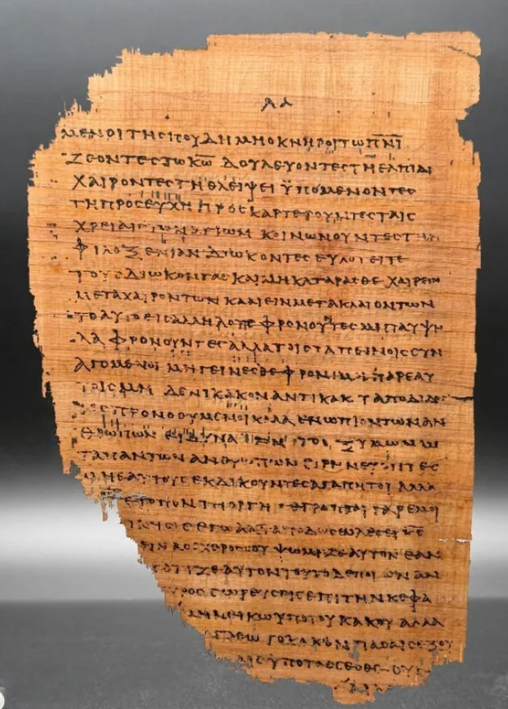
This is Papyrus 46 (abbreviated 𝒫46), a leaf from one of the oldest and most complete surviving copies of Paul's letters — dated by paleographers to approximately AD 175–225, roughly 150 years after Paul wrote Romans (c. AD 57).
The side shown here preserves Romans 12:10–13:1 in the original Koine Greek. The section marker ΑΛ (Greek numerals = 31) appears at the top — evidence of an already-organized, carefully maintained textual tradition within the early church.
The original codex contained most of Paul's corpus. Its surviving leaves are now divided between the Chester Beatty Library in Dublin and the University of Michigan. It remains one of the most important witnesses to the early text of the New Testament.
The Greek Text
The following is the Greek text visible on this folio leaf, corresponding to Romans 12:11–21 and the opening of Romans 13:
ΑΛ

ΤΗ ΣΠΟΥΔΗ ΜΗ ΟΚΝΗΡΟΙ  ΤΩ ΠΝΕΥΜΑΤΙ
ΖΟΝΤΕΣ  ΤΩ ΚΩ ΔΟΥΛΕΥΟΝΤΕΣ  ΤΗ ΕΛΠΙΔΙ
ΧΑΙΡΟΝΤΕΣ  ΤΗ ΘΛΕΙΨΕΙ ΥΠΟΜΕΝΟΝΤΕ
ΤΗΙ ΠΡΟΣΕΥΧΗ ΠΡΟΣΚΑΡΤΕΡΟΥΝΤΕΣ ΤΑΙΣ
ΧΡΕΙΑΙΣ ΤΩΝ ΑΓΙΩΝ ΚΟΙΝΩΝΟΥΝΤΕΣ ΟΤ
ΦΙΛΟΞΕΝΙΑΝ ΔΙΩΚΟΝΤΕΣ  ΕΥΛΟΓΕΙ ΤΕ
ΤΟΥΣ ΔΙΩΚΟΝΤΕΣ ΥΜΑΣ ΕΥΛΟΓΕΙΤΕ ΚΑΙ ΜΗ
ΚΑΤΑΡΑΣΘΕ  ΧΑΙΡΕΙΝ ΜΕΤΑ ΧΑΙΡΟΝΤΩΝ
ΚΛΑΙΕΙΝ ΜΕΤΑ ΚΛΑΙΟΝΤΩΝ  ΤΟ ΑΥΤΟ ΕΙΣ
ΑΛΛΗΛΟΙΣ ΦΡΟΝΟΥΝΤΕΣ  ΜΗ ΤΑ ΥΨΗΛΑ
ΦΡΟΝΟΥΝΤΕΣ ΑΛΛΑ ΤΟΙΣ ΤΑΠΕΙΝΟΙΣ ΣΥΝ
ΑΓΟΜΕΝΟΙ  ΜΗ ΓΙΝΕΣΘΕ ΦΡΟΝΙΜΟΙ
ΠΑΡΕΑΥΤΟΙΣ  ΜΗΔΕΝΙ ΚΑΚΟΝ ΑΝΤΙ ΚΑΚΑ ΑΠΟΔΙ
ΔΟΝΤΕΣ  ΠΡΟΝΟΟΥΜΕΝΟΙ ΚΑΛΑ ΕΝΩΠΙΟΝΤΩΝ ΑΝ
ΘΡΩΠΩΝ  ΕΙ ΔΥΝΑΤΟΝ ΤΟ ΕΞ ΥΜΩΝ ΜΕΤΑ
ΠΑΝΤΩΝ ΑΝΘΡΩΠΩΝ ΕΙΡΗΝΕΥΟΝΤΕΣ  ΑΓ
ΑΠΗΤΟΙ  ΜΗ ΕΚΔΙΚΕΙΣ ΕΓΩΑΝΤΟΠΟΔΩΣΩ
ΛΕΓΕΙ ΚΣ  ΑΛΛΑ ΕΑΝ ΠΕΙΝΑ Ο ΕΧΘΡΟΣ
ΣΟΥ ΨΩΜΙΖΕ ΑΥΤΟΝ  ΕΑΝ ΔΙΨΑ ΠΟΤΙΖΕ
ΑΥΤ  ΤΟΥΤΟ ΓΑΡ ΠΟΙΩΝ ΑΝΘΡΑΚΑΣ
ΠΥΡΟΣ ΣΩΡΕΥΣΕΙΣ ΕΠΙ ΤΗΝ ΚΕΦΑΛΗΝ ΑΥΤΟΥ
ΜΗ ΝΙΚΩ ΥΠΟ ΤΟΥ ΚΑΚΟΥ ΑΛΛΑ ΝΙΚΑ ΕΝ
ΤΩ ΑΓΑΘΩ ΤΟ ΚΑΚΟΝ  ΠΑΣ ΨΥΧΗ ΕΞΟΥΣΙΑΙΣ
ΥΠΕΡΕΧΟΥΣΑΙΣ ΥΠΟΤΑΣΣΕΣΘΩ...
English Translation (ESV)
Romans 12:11–21
v.11 — Do not be slothful in zeal; be fervent in spirit; serve the Lord.
v.12 — Rejoice in hope; be patient in tribulation; be constant in prayer.
v.13 — Contribute to the needs of the saints; seek to show hospitality.
v.14 — Bless those who persecute you; bless and do not curse them.
v.15 — Rejoice with those who rejoice; weep with those who weep.
v.16 — Live in harmony with one another. Do not be haughty, but associate with the lowly. Never be wise in your own sight.
v.17 — Repay no one evil for evil, but give thought to do what is honorable in the sight of all.
v.18 — If possible, so far as it depends on you, live peaceably with all.
v.19 — Beloved, never avenge yourselves, but leave it to the wrath of God, for it is written: "Vengeance is mine, I will repay, says the Lord."
v.20 — "If your enemy is hungry, feed him; if he is thirsty, give him something to drink; for by so doing you will heap burning coals on his head."
v.21 — Do not be overcome by evil, but overcome evil with good.
Romans 13:1 (beginning, visible at the bottom of the folio)
Let every person be subject to the governing authorities...
Apologetic Significance — Against the "Corrupted Bible" Argument
The most common objection raised in Islamic apologetics against the New Testament is that the Bible has been corrupted (tahrif) — altered or falsified over the centuries, and therefore cannot be trusted. Papyrus 46 is a direct, physical refutation of this claim.
1. The Text Matches Modern Bibles
Compare the Greek visible on this papyrus to any modern critical Greek New Testament (NA28, UBS5) or any standard English translation (ESV, NIV, NASB). The text is virtually identical. The same words. The same commands. The same "bless those who persecute you" and "love your enemy." Nothing has been altered in 1,800 years.
This is not a claim made by Christians — it is demonstrable by any person who can read Greek, looking directly at the physical artifact.
2. The Timeline Destroys the Corruption Theory
| Event | Date |
|---|---|
| Paul writes Romans | c. AD 57 |
| 𝒫46 copied | c. AD 175–225 |
| Muhammad receives the Quran | c. AD 610–632 |
| Quran praises the Injil as from God (Surah 5:47) | c. AD 632 |
The Quran, written in the 7th century, explicitly affirms the Injil (Gospel/NT) as the word of God and instructs People of the Book to judge by it. P46 predates the Quran by 400 years. If the text in P46 matches modern Bibles — which it does — then the text was already fixed in its current form centuries before Muhammad was born.
The logical question for the Muslim claim: when, exactly, was the corruption supposed to occur? Before P46 (which means within decades of Paul)? After P46 (which means after the Quran affirmed the text)? There is no window in which the corruption could have happened without leaving textual evidence — and the manuscript tradition shows no such evidence.
3. The Volume of Manuscript Evidence Is Unmatched
| Ancient Document | Surviving Manuscripts | Earliest Copy | Gap from Original |
|---|---|---|---|
| Homer's Iliad | ~1,800 | c. 400 BC | ~500 years |
| Julius Caesar | ~251 | c. AD 900 | ~1,000 years |
| Plato | ~210 | c. AD 895 | ~1,200 years |
| New Testament | 5,800+ Greek; 20,000+ total | c. AD 125–175 | 50–100 years |
No ancient document comes close to the New Testament in the number of manuscripts or the proximity of copies to the originals. If the NT text is corrupted, then no ancient text can be trusted — including the works on which all of classical history and philosophy are based.
4. The "Bless Your Enemies" Problem for the Corruption Theory
If the Bible was corrupted by early Christians to promote their agenda, why does this papyrus — from within living memory of the apostolic age — contain "Bless those who persecute you; bless and do not curse them" and "Do not be overcome by evil, but overcome evil with good"?
A corrupted text written to justify Christian power or conquest would not produce these commands. The text that emerges from our oldest manuscripts is one of radical forgiveness, enemy love, and refusal of revenge — the most countercultural ethical teaching in the ancient world, preserved without modification from the earliest witnesses.
5. The Codex Form as Evidence of Early Organization
P46 is written in codex form (bound pages, like a modern book) rather than a scroll. This means early Christians were already:
- Collecting Paul's letters together as a unified corpus
- Organizing them with section markers (the ΑΛ at the top of this folio)
- Treating them as authoritative Scripture requiring careful preservation
This level of institutional care and organization — visible in the manuscript itself — is inconsistent with a tradition of careless transmission or deliberate corruption.
The Physical Artifact — Own a Museum-Quality Replica
Wes Huff's Manuscript Shop produces hand-crafted scholarly replicas of P46, allowing students, pastors, and apologists to hold this evidence in their hands.
The replica covering this exact folio (Romans 12:10–13:1) is available as an 8×10 screw-down acrylic display — museum quality, historically faithful in scale, letterform, and layout.
𝒫46 Manuscript Replica — Romans 12:10–13:1 — Manuscript Shop
Holding a physical replica of a 2nd-century manuscript in your hands is one of the most powerful ways to make this evidence concrete — in your own study, in a classroom, or in a conversation with a skeptic.
Summary
Papyrus 46 does three things simultaneously:
- It proves the text's stability — what you read in your Bible today is what 2nd-century Christians read in theirs
- It destroys the corruption timeline — the text was fixed centuries before Muhammad was born, and the Quran affirmed it
- It testifies to the content — the oldest surviving copy of Romans 12 commands love for enemies and blessing for persecutors, unchanged and unedited, in the original hand
The Bible does not ask for blind faith in its reliability. It offers physical, dateable, publicly inspectable evidence — papyrus that has outlasted empires, holding the same words that were written when Paul was still living within memory of those who copied them.