📖 Icon Veneration — A Biblical and Historical Examination
Type: Apologetics Reference Document — Catholic & Orthodox Dialogue
The Claim Being Examined
The Eastern Orthodox and Roman Catholic traditions defend the practice of kissing icons, bowing before them, and directing prayer through them on the grounds that:
- This constitutes veneration (dulia/hyperdulia), not worship (latria) — a distinction only worship of God deserves
- 2 Thessalonians 2:15 commands holding to the traditions handed down — and icon veneration is such a tradition
- The Second Council of Nicaea (787 AD) formally endorsed it, making it binding church teaching
Each of these will be examined in turn. But the biblical case must come first.
Part I — The Biblical Testimony
Acts 17:29 — The Clearest Refutation
"Being then God's offspring, we ought not to think that the divine being is like gold or silver or stone, an image formed by the art and imagination of man." — Acts 17:29 (ESV)
Paul's argument at the Areopagus cuts directly against the iconodule practice. The reasoning is straightforward:
- God is the source of human life (v. 28 — "in him we live and move and have our being")
- Therefore, God cannot be adequately represented by any material object formed by human art
- To use such objects as focal points of devotion is to misrepresent the nature of the Divine Being
Paul is not merely prohibiting worship of false gods. He is making an ontological argument: the nature of God is incompatible with being represented by material objects crafted by human hands and imagination. This applies equally to gold Zeuses and painted icons of Christ.
Exodus 20:4–5 — The Second Commandment
"You shall not make for yourself a carved image, or any likeness of anything that is in heaven above, or that is in the earth beneath, or that is in the water under the earth. You shall not bow down to them or serve them." — Exodus 20:4–5 (ESV)
Note carefully:
- The prohibition includes anything in heaven above — which would include angels, saints, and the glorified Christ
- The command is specifically against bowing down (Hebrew: shachah / Greek: proskuneo) — the very posture used in icon veneration
- The defense that this only prohibited idols of pagan gods fails because the verse explicitly says "any likeness of anything that is in heaven above" — not "any likeness of pagan gods"
Eastern Orthodox apologists often argue that the commandment was against worshipping other gods, not representational art of the true God. But Deuteronomy 4:15–19 closes that door entirely:
"Since you saw no form on the day that the LORD spoke to you at Horeb out of the midst of the fire, beware lest you act corruptly by making a carved image for yourselves, in the form of any figure, the likeness of male or female… lest you raise your eyes to heaven, and when you see the sun and the moon and the stars… you be drawn away and bow down to them and serve them." — Deuteronomy 4:15–19 (ESV)
God's reason for prohibiting images is explicit: Israel saw no visible form of God at Sinai. The Incarnation does not override this — it fulfills it. The eternal Word took on human flesh, but that flesh is now glorified and ascended. We no more have access to the form of the glorified Christ than Israel had to the form of YHWH at Sinai.
2 Kings 18:4 — The Nehushtan Precedent
"He removed the high places and broke the pillars and cut down the Asherah. And he broke in pieces the bronze serpent that Moses had made, for until those days the people of Israel had made offerings to it (it was called Nehushtan)." — 2 Kings 18:4 (ESV)
This is the most powerful historical analogy in Scripture. The bronze serpent was:
- Commanded directly by God (Numbers 21:8–9)
- The means of miraculous healing
- A legitimate type of Christ (John 3:14)
And yet — when people began directing devotion toward it, King Hezekiah destroyed it. The object that God himself ordained became an idol the moment it became an object of veneration. He called it simply Nehushtan — "a piece of bronze." This is precisely the reformer's argument against icons.
If even a God-ordained object became idolatrous when venerated, how much more an object crafted by human hands and imagination?
John 4:23–24 — Worship in Spirit and Truth
"But the hour is coming, and is now here, when the true worshipers will worship the Father in spirit and truth, for the Father is seeking such people to worship him. God is spirit, and those who worship him must worship in spirit and truth." — John 4:23–24 (ESV)
Jesus is here contrasting the coming age of worship with the old system of localized, material-mediated religion (the Jerusalem Temple, Mount Gerizim). The new covenant worship is characterized by inwardness and truth — not by sacred objects, locations, or material media. Icon veneration moves precisely in the opposite direction from what Jesus describes.
Part II — The Dulia/Latria Distinction Examined
The Catholic and Orthodox defense rests on the distinction:
| Term | Meaning | Directed to |
|---|---|---|
| Latria | Full worship | God alone |
| Hyperdulia | Highest veneration | Mary |
| Dulia | Veneration/honor | Saints, icons |
The argument is that bowing before icons, kissing them, and praying through them is dulia, not latria, and therefore not prohibited.
Why This Distinction Fails
1. Scripture does not make this distinction.
The Greek word used throughout the New Testament for worship — proskuneo — covers bowing, kissing, and prostration. It is the same word used when the disciples worship the risen Christ (Matthew 28:17), when Satan demands it from Jesus (Matthew 4:9), and when God commands "Let all God's angels worship [proskuneo] him" (Hebrews 1:6). The biblical prohibition on proskuneo toward created things (Revelation 22:8–9) does not carve out a subcategory for images of saints.
2. The distinction was invented to justify the practice, not derived from Scripture.
No apostolic letter, no New Testament text, and no early church document before the 4th century distinguishes dulia from latria in the context of image veneration. The distinction emerged as theological cover for a practice the early church universally opposed.
3. In practice, the distinction is unenforceable.
The worshipper bowing before a Pantocrator icon with tears in their eyes, kissing it, and asking for intercession is performing the same outward acts as any other ancient worshipper before their deity. The internal intention to offer only "veneration" rather than "worship" is not observable and is not a biblical category.
4. The Second Commandment does not distinguish.
Exodus 20:4–5 says: "You shall not bow down [proskuneo] to them." The commandment regulates the outward act, not the internal category assigned to it.
Part III — The Historical Testimony: The First 400 Years
This is perhaps the most decisive argument. If icon veneration is an apostolic tradition, it must appear in apostolic and post-apostolic practice. It does not.
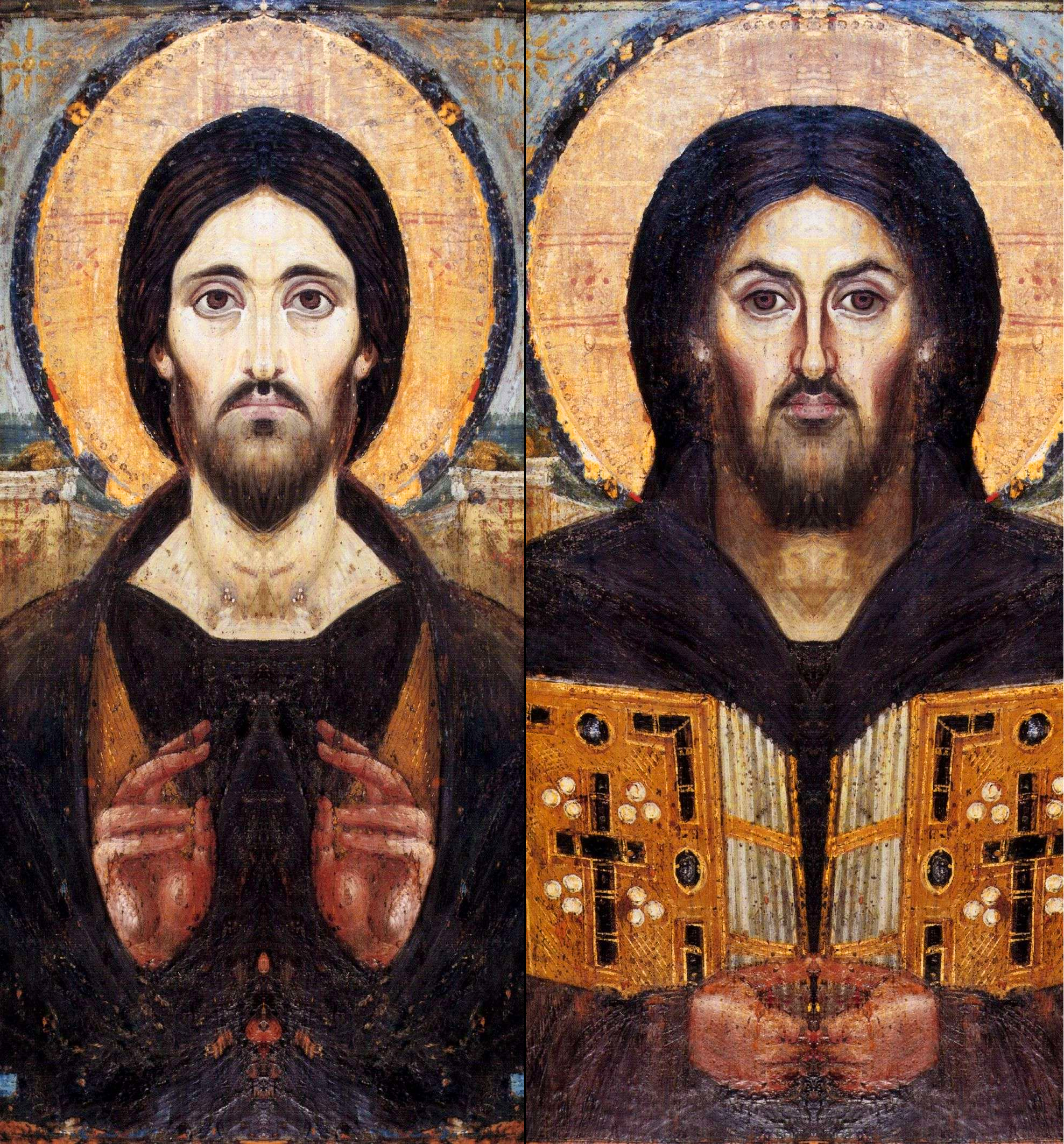
The Early Fathers Opposed It
Far from endorsing icon veneration, the earliest church leaders actively opposed it:
Origen of Alexandria (c. 185–254 AD)
In Contra Celsum (VIII.17–18), Origen defends Christians against the pagan accusation that they have no altars, temples, or images — and agrees that this is correct:
"We are not permitted to use images in worship... The Divine Nature can only be known by the mind, not by the senses."
He treats the absence of images as a mark of the true religion in contrast to paganism.
Tertullian of Carthage (c. 160–220 AD)
In De Idololatria, Tertullian condemns all forms of image-making for religious use as idolatry, without qualification. He writes against craftsmen who make religious images, calling their work incompatible with Christian identity:
"The principal crime of the human race... is idolatry... Idolatry is attended by all the crimes: it is their cause, it is their result." (De Idololatria, I)
Eusebius of Caesarea (c. 260–340 AD)
Eusebius, the great church historian and advisor to Constantine, wrote a now-famous letter to Constantia (the emperor's sister), who had asked him to send her an icon of Christ. His response is a direct refutation of the entire iconodule position:
"Who would be able to depict by dead and senseless colors and meaningless lines the brilliant and radiant glory of [Christ's] dignity?... Such things are forbidden [by Scripture]... We must confess with our mouth and believe with our heart, but not seek after such things with our eyes." — Eusebius, Epistle to Constantia
Note the date: c. 320 AD — before the Council of Nicaea, before Christianity was fully legalized. This is not a fringe position. This is the church historian who knew more about early Christian practice than almost any other figure.
Epiphanius of Salamis (c. 310–403 AD)
Epiphanius is perhaps the most dramatic witness. He is recorded as having torn down a painted curtain in a church displaying a human figure — reportedly the image of Christ or a saint — and replacing it with plain cloth. He wrote against images in an extant letter:
"I beseech you to order that such curtains... which are contrary to our religion, be removed and used for the burial of the poor. And henceforward let no such images be placed in the church of Christ." — Epiphanius, Letter 51 to John of Jerusalem
He did not qualify this as opposition only to worship of images. He opposed their presence in churches entirely.
Augustine of Hippo (354–430 AD)
Augustine's position was more cautious — he allowed instructional art but was clear that veneration of images crossed a line:
"I know that many are worshippers of tombs and pictures. I know that there are many who drink to excess over the dead... But the Church does not approve of this." — Augustine, Against Faustus the Manichaean, XX.21
He also wrote:
"Whoever adores images must necessarily be led astray by them."
Augustine distinguished art from veneration, but the veneration itself — the kissing, bowing, praying-through — he treated as a deviation from true religion.
The Timeline
| Date | Event |
|---|---|
| c. 30–100 AD | Apostolic period — no iconodule practice attested |
| c. 100–300 AD | Early Fathers universally oppose image veneration |
| c. 306–337 AD | Eusebius explicitly rejects images of Christ in writing |
| c. 400 AD | Epiphanius tears down church image, writes against the practice |
| c. 726–787 AD | Byzantine Iconoclast Controversy — emperors ban images, defenders emerge |
| 787 AD | Second Council of Nicaea formally approves icon veneration |
Nearly 800 years elapsed between Christ and the formal ecclesiastical approval of icon veneration. If it were an apostolic tradition, this gap is inexplicable.
Part IV — The 2 Thessalonians 2:15 Reversal
"So then, brothers, stand firm and hold to the traditions that you were taught by us, either by our spoken word or by our letter." — 2 Thessalonians 2:15 (ESV)
This verse is a pillar of the Catholic and Orthodox appeal to tradition. But it cuts against icon veneration, not for it.
The argument must run both ways. If we are to hold to the traditions Paul handed down, we must ask: what traditions did the earliest church actually practice? The answer from Origen, Tertullian, Eusebius, and Epiphanius is unanimous: they did not venerate images.
The traditions Paul refers to are the gospel proclamation, apostolic ethics, and doctrinal instruction attested in the New Testament itself — not a ceremonial practice that would not be formally invented for another 700+ years.
To invoke 2 Thessalonians 2:15 in defense of icon veneration is to appeal to a tradition that the very earliest witnesses — those closest to the apostles — would have rejected. The tradition appeal therefore refutes the practice rather than defending it.
Part V — A Distraction from the Word of God
Beyond the theological and historical objections, there is a practical spiritual concern that must not be overlooked.
The New Testament consistently locates spiritual growth, faith, and encounter with God in the Word:
- Romans 10:17 — "Faith comes from hearing, and hearing through the word of Christ." God's appointed means of drawing near to Him is Scripture — not visual objects.
- Colossians 3:16 — "Let the word of Christ dwell in you richly." The richness Paul envisions is doctrinal and prayerful meditation on the text, not contemplation of painted faces.
- 2 Timothy 3:16–17 — "All Scripture is breathed out by God and profitable for teaching, for reproof, for correction, and for training in righteousness." The icon does none of these things.
- Psalm 1:2–3 — The blessed man "meditates on his law day and night" and is like a tree planted by streams of water. The source of spiritual nourishment is the Word — not a physical image.
- Isaiah 8:20 — "To the teaching and to the testimony! If they will not speak according to this word, it is because they have no dawn." God directs seekers to Scripture, not to sacred objects.
The devotional energy invested in icon veneration — the prostrations, the kisses, the candles, the prolonged gaze at a painted surface — is energy diverted from what the New Testament actually commends: hearing, reading, meditating on, and obeying the living Word of God. The icon becomes a competing focal point that, however reverently intended, draws the worshiper toward a creature-made object rather than toward the God who speaks through His Word.
This is not merely a Protestant concern. The Reformers observed it precisely because they saw it playing out in pastoral reality: people who could not recite the Lord's Prayer or the Ten Commandments had elaborate devotional practices before images. The image had substituted for, rather than supplemented, the Word.
Icon veneration does not lead toward truth — it leads away from it, by replacing God's appointed means of grace with a human invention that the earliest church did not know.
Part VI — Responding to Common Objections
"The Incarnation Changes Everything — God Took Human Form"
Response: The Incarnation means God became visible in the person of Christ. It does not mean that painted representations of Christ are legitimate objects of veneration. The disciples who saw Jesus in the flesh did not manufacture portraits to bow before. The Incarnation is the ground of salvation, not of iconodulia.
Furthermore, no icon of Christ depicts the glorified, ascended Christ as He now exists. Every icon depicts a human approximation based on artistic tradition — precisely the "image formed by the art and imagination of man" that Paul warns against in Acts 17:29.
"We Venerate, We Don't Worship"
Response: See Part II above. The distinction is unscriptural, unenforced by the commandment, and absent from the early church's vocabulary in this context. The commandment says: "You shall not bow down to them." It does not add, "unless you call it veneration."
"The Council of Nicaea II Was a Legitimate Church Council"
Response: Even granting conciliar authority, a council cannot authorize what Scripture prohibits. Councils can err — Galatians 1:8 applies even to councils. The question is not whether a council approved it, but whether the approval is consistent with Scripture and the earliest Christian practice. On both counts, it is not.
"Icons Are Just Like Family Photos"
Response: We do not bow before family photos, kiss them as acts of devotion, or ask dead relatives to intercede with God through them. The analogy fails at every point of comparison.
Summary
| Question | Answer |
|---|---|
| Is icon veneration found in the New Testament? | No |
| Is it attested in the first 300 years of the church? | No — universally opposed |
| Did the earliest Fathers endorse it? | No — Origen, Tertullian, Eusebius, and Epiphanius all opposed it |
| Does the dulia/latria distinction have biblical support? | No — proskuneo is prohibited regardless of internal category |
| Does 2 Thessalonians 2:15 support it? | No — the earliest traditions opposed it |
| When was it formally approved? | 787 AD — nearly 800 years after Christ |
The earliest traditions did not accept icon veneration. We should follow them.
See also: